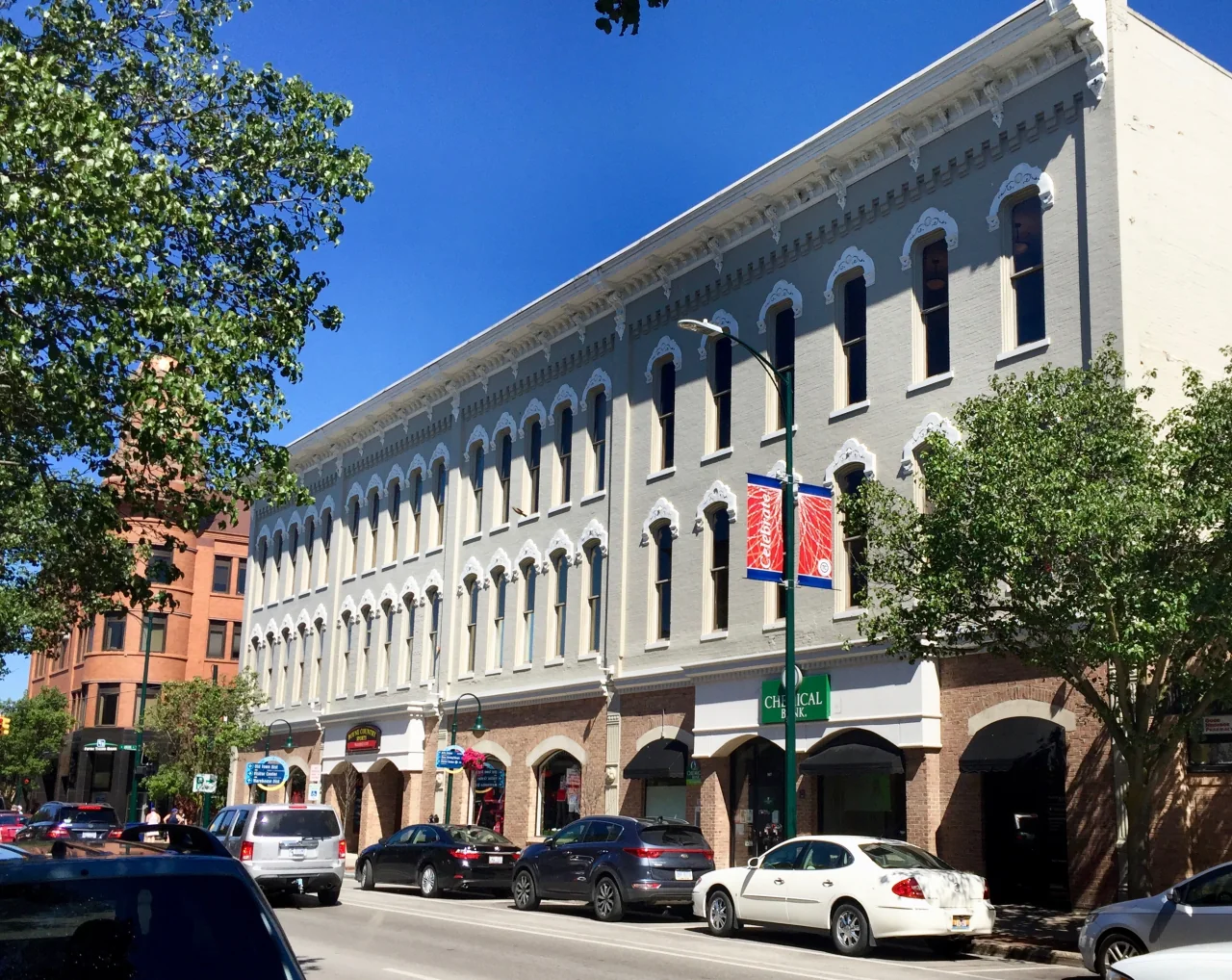
Front Street, Traverse City, 2017. Photo: Warren LeMay / Wikimedia Commons.
For company owners
Find out whether your records fit a buyer’s needs.
Start with what your company creates: project files, support conversations, software histories, inspection results or service records. SnowRock discusses the records and seeks potential buyers whose requirements may fit.
You choose whether to proceed. Before an introduction, agree what company details can be shared. Before a sample, agree the intended use, access and exclusions.
Define a search around a task your AI must perform.
Name the task, industry, source systems, fields and permissions you need. Include Michigan when the region matters, then state how your team will judge a sample.
A commissioned search can include company research, qualification questions and progress reports under an agreed scope. Each company decides whether to discuss a license.
Public statistics can help a buyer choose an industry and region. The records needed to train or test a model usually require a separate conversation with the company that holds them.
Industry counts and company records answer different questions.
Michigan’s 2026 manufacturing report counts 582,700 manufacturing workers in 2025. Automotive accounts for 28.1% of that employment. The report also separates metals and machinery activity, helping buyers define a more specific company search.
Those are workforce counts, not a count of datasets or willing sellers. A buyer testing inspection decisions needs different records from one testing machine repair. Name the process, then ask whether inspection results connect to the applicable specification, production run and service history.
This proposed brief asks for records that let a model explain an inspection result using production and service history. All identifiers below are invented. This is an example of a request, not a dataset offered by SnowRock or a confirmed buyer assignment.
01
Inspection
Inspection INS-104
Lot LOT-042 · specification REV-C
Measurement, unit, tolerance, result and inspection time. Keep the specification version used for the decision.
02
Process record
Run RUN-218
Lot LOT-042 · machine EQUIP-07
Operation, recorded settings, material batch and production time. Preserve the link to the inspected lot.
03
Service history
Work order WO-031
Machine EQUIP-07 · completed before RUN-218
Reported fault, diagnosis, repair, parts and completion time. Show when the machine returned to service.
Recorded outcome
Keep the inspector’s decision to accept, reject or rework the lot, reviewer note and approval time with INS-104. Give the model only records available when the inspector made the decision. Keep later repairs and outcomes separate for review; a matching lot or machine ID alone does not explain a defect’s cause.
Sample decision
The buyer should check that each ID leads to the matching record, dates stay in order, units are defined and the specification version sets the measurements and tolerances. Its reviewer can then test the model’s answer against the recorded result and decide whether to accept, revise or stop.
Before records move
Agree access, preparation and payment in writing.
Owner approval
The company identifies who can approve a license, which records it can share and what needs to be excluded. Customer agreements, personal information and third-party material can affect that decision.
Buyer review
The buyer states the intended use, required fields, sample checks and acceptance decision. It agrees the data-license price and payment schedule directly with the owner.
Delivery
The owner and buyer name who prepares the files, any preparation cost, the format and the secure transfer method. The owner delivers data directly to the buyer.
SnowRock’s service
SnowRock coordinates the agreed introduction or sourcing assignment. The buyer pays SnowRock’s separate fee under written terms. Technical processing is included only if separately agreed.
Develop your requirements
See the fields behind a useful description.
These pages show fictional field-level examples and explain how records connect. Use them to describe what exists or what your team needs.
No. SnowRock is based in Traverse City, Michigan, and serves U.S. companies and data buyers. A buyer can specify a region when location is relevant to its task. A search can also cover several states or the country.
What should an owner send first?
A description of the business, record types, systems, date range and how related records connect. Identify who can approve a license. Leave customer names, raw records and confidential files out of the first inquiry.
What does an introduction cost?
There is no upfront SnowRock fee for a company introduction. The buyer pays SnowRock’s agreed introduction fee, disclosed before the deal. A commissioned search or additional paid work requires a separate written agreement stating the scope, fee and payment trigger. The buyer’s data-license payment to the owner is separate.
Who signs the license and sends the records?
The owner and buyer agree and sign the license, including permitted uses, preparation, delivery and payment. The owner approves what can be shared and transfers records directly to the buyer. SnowRock coordinates introductions and discussions. Extraction, cleanup, labeling or technical delivery by SnowRock is included only if separately agreed.
Start with a description
Tell us what your company has or what your team needs.
A short description is enough for the first conversation. Keep confidential files out of the inquiry.