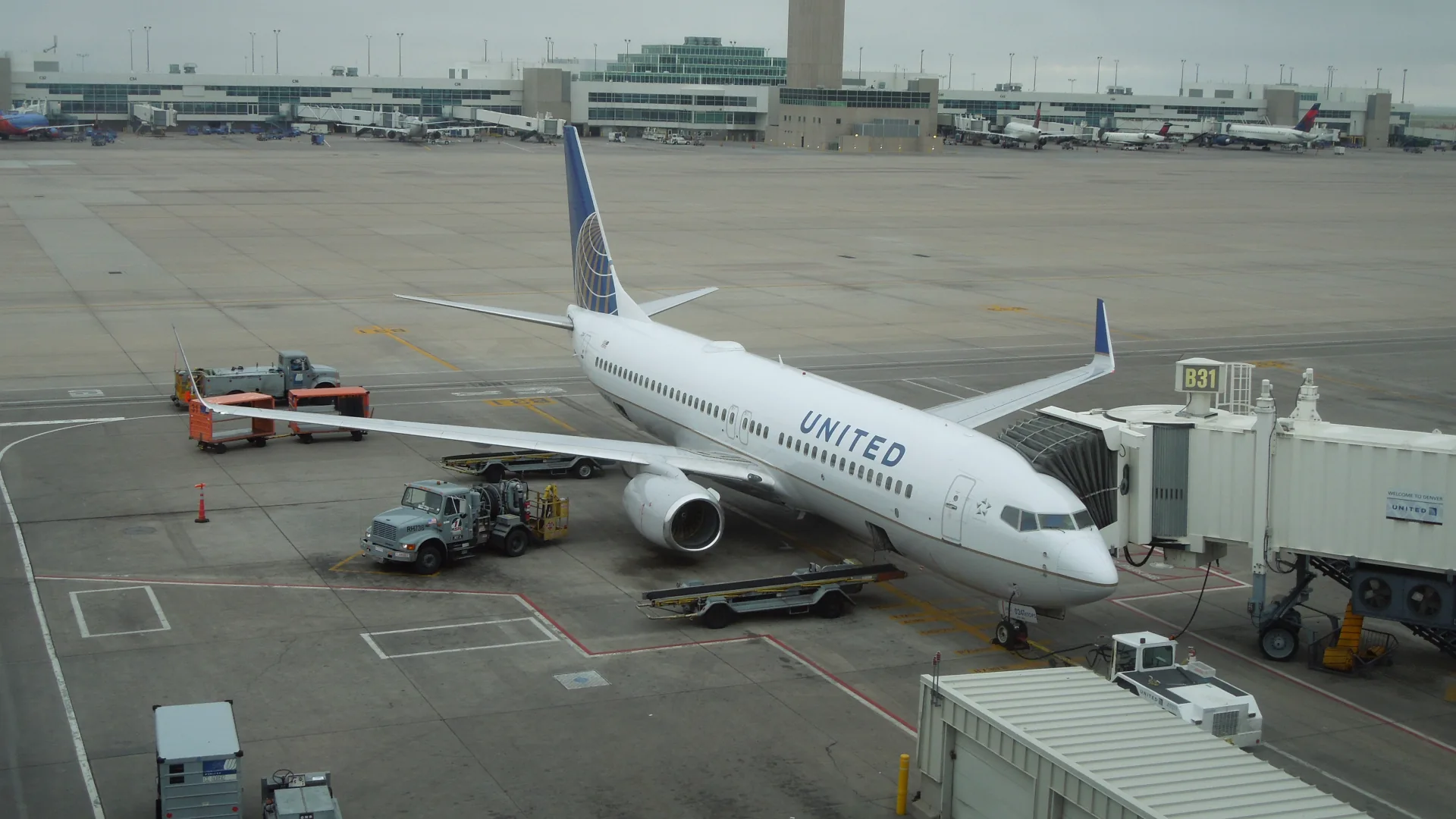
“We are having an outage where nothing is transmitting at this moment,” a voice said in air traffic audio published by NBC Chicago on Monday. In a separate radio exchange in El Paso, the pilot of United Flight 1728 told a controller the Denver-bound flight was “still waiting on our final weights,” CNN reported. The crew needed those figures before takeoff.
United said it had resolved the technology issue around 6:01 p.m. ET. CNN reported the airline’s confirmation at 6:02 p.m. ET. It said flights already in the air and those operated by United Express had been unaffected. United reported no indication of a cybersecurity issue and gave no cause for the failure.

The numbers crews needed before takeoff
One early sign came around 4:02 p.m. ET in Denver, where a United crew reported trouble getting its final weights, according to radio traffic reviewed by AirlineGeeks. Users began reporting problems to Downdetector at 4:39 p.m. Around 5 p.m., United acknowledged a widespread outage in a public reply.
The failure took out several web-based applications that pilots use, including one for crew communications, according to a pilots’ union memo reviewed by Reuters. The memo said United could not provide final aircraft weights for departing flights. At Chicago O’Hare, a ramp controller said the outage was “affecting pretty much all of our mainline departures,” according to radio traffic reviewed by AirlineGeeks. CNN separately reported that a company alert named applications for flight planning, weather briefings and crew management.
The problem was tied to paperwork with a safety purpose. Federal rules require an airline’s load manifest to record the loaded weight and show that the plane’s center of gravity is within approved limits. The manifest also has to reflect the maximum takeoff weight for the runway conditions. Crews use those figures to check whether a particular aircraft, with the passengers, baggage and fuel it has aboard, is within the limits for its departure.
As long as the final figures were unavailable, the affected crews could not complete that check. That explains why a failure in an airline’s applications could keep departures waiting even as its aircraft already in the air continued toward their destinations.
A repair could come before a normal schedule
FlightAware had counted 418 United delays and 21 cancellations when UPI published its report at 5:40 p.m. ET. Travelers reported trouble at United hubs in Chicago, Denver, Houston, Newark and San Francisco.

The FAA issued no ground stop or ground delay program for United. Hannah Walden, a spokesperson for the agency, told CNN that the outage was on United’s side. Friday’s nationwide ground stop followed a separate failure in the FAA’s own communications network. The agency says it is still investigating what caused that network to become unstable.

United Airlines Holdings shares ended the regular session up 1.33 percent at $110.76, according to Nasdaq. The shares traded at $107.94 at 5:40 p.m. ET in after-hours trading, roughly 2.5 percent below the close. Nasdaq’s 6:32 p.m. ET quote showed the shares at $109, still below the closing price.
With its systems restored, United said some delays and cancellations could continue as it got aircraft and crews back on schedule. At 7:16 p.m. ET, FlightAware’s tally for United’s Monday schedule stood at 665 delays and 26 cancellations. The figures cover the full day, including flights that may have been disrupted for other reasons.