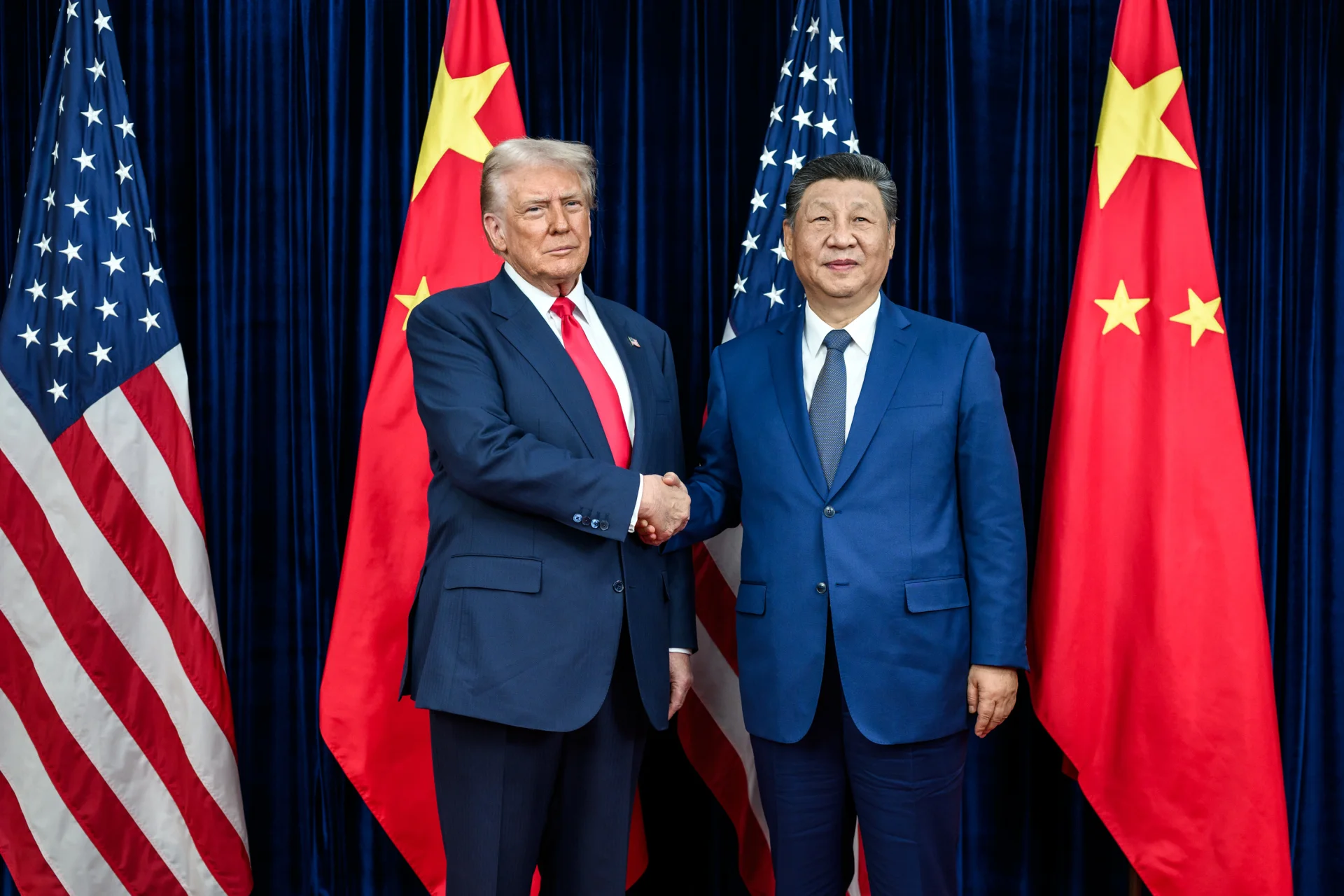
China confirmed Monday that Xi Jinping will sit down with Donald Trump and Vladimir Putin in Shenzhen on Thursday. It will be the first face-to-face meeting of the three countries’ heads of state together, according to China’s Foreign Ministry. They arrive nine months after the United States and Russia lost the treaty that used to cap their deployed strategic nuclear forces.
Trump left Washington on Monday for a trip that starts in Manila and continues to Shenzhen for the Asia-Pacific Economic Cooperation summit. On the sidelines, the three leaders are expected to discuss nuclear arms control. Trump also told reporters he plans to raise Russia’s war in Ukraine. U.S. officials had previously told reporters that Ukraine would be left off that agenda, the Associated Press reported.
What New START limited
New START expired on February 5. For years, it gave Washington and Moscow limits on deployed strategic warheads and their delivery systems. China was never a party. The United Nations secretary-general called the expiration a serious moment for international security and urged the United States and Russia to return to negotiations.
Those limits gave each government a number to check. The agreement required the sides to exchange information about their weapons and entitled them to inspect each other’s facilities. Those checks had weakened well before the treaty expired. In a 2025 report, the State Department said Russia had halted participation in the agreement and had stopped providing required updates. Rebuilding verification would mean getting the two sides to share information again, even before adding a third government.

An agreement with China would have to account for three forces of very different sizes. The Stockholm International Peace Research Institute estimated at the start of 2026 that the United States and Russia together held about 86 percent of the world’s nuclear warheads, including retired weapons awaiting dismantlement. China’s arsenal was much smaller, though the institute has documented its growth. An equal limit would affect all three differently. An agreement would have to cover what each country counts and how the others can check.
Three governments have put different issues on the agenda
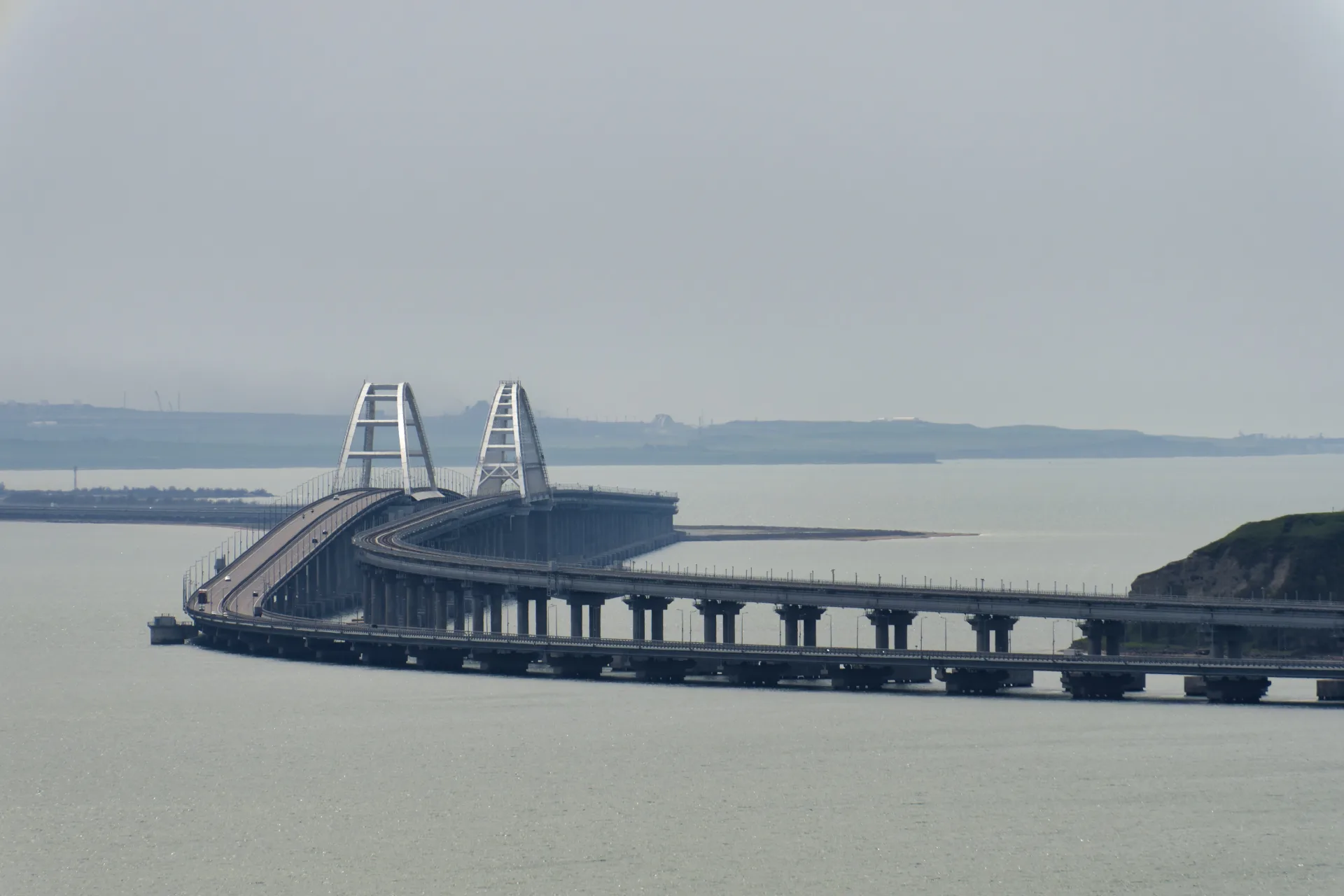
For Trump, nuclear disarmament offers a public objective for a trip that also includes trade and the war in Iran. He added Ukraine to that list as Russia reported a record overnight tally of drone interceptions and acknowledged a strike on the Crimean Bridge. Kyiv has no announced seat at Thursday’s meeting.
Ukraine’s absence matters to any conversation about ending the war. Trump can tell Putin what terms the United States would support. He cannot commit Kyiv to them. The practical significance of raising the war in Shenzhen depends on whether the discussion leads to negotiations in which Ukraine is represented.
Putin enters the meeting with Russia’s war still underway and the United States seeking further talks between Moscow and Kyiv. Kremlin foreign affairs adviser Yuri Ushakov indicated that officials were arranging a separate Putin and Trump meeting in Shenzhen, the Associated Press reported. U.S. officials told The Washington Post on Friday that no separate meeting was on the schedule.
Xi gets to host the first meeting and define how Beijing presents it. “The summit is of groundbreaking significance,” Foreign Ministry spokesperson Mao Ning said Monday. She described the agenda in terms of peace and stability among major countries. China did not commit to reducing its arsenal or propose a limit.

After Thursday, the test will be what the three governments tell their negotiators to do. An instruction to meet again, with a date and an agreed list of weapons to discuss, would give the summit a consequence beyond the leaders’ appearance together.