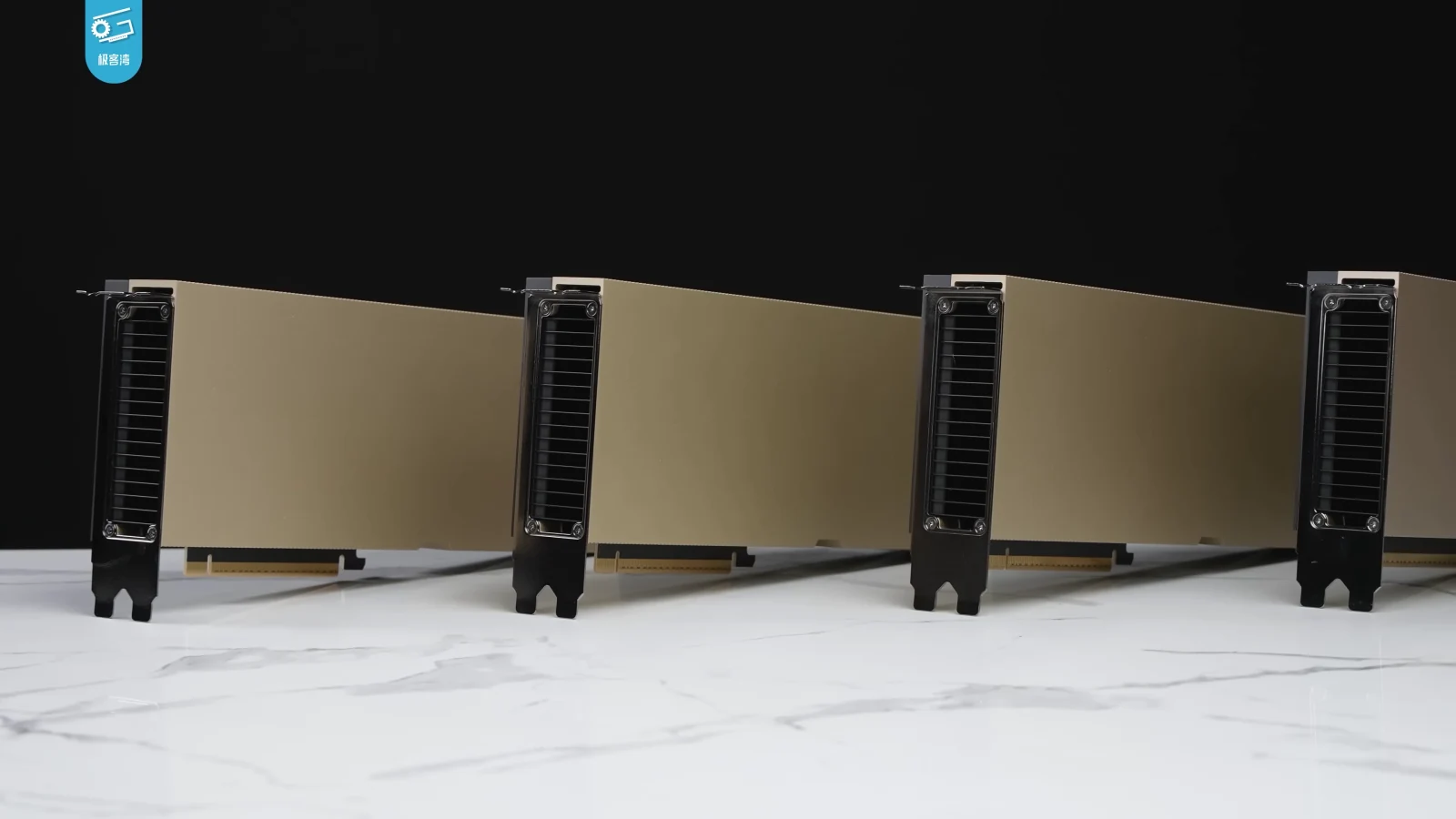
Nvidia has given server builders key rack and computing-tray designs for its Vera Rubin platform through the Open Compute Project. Announced October 12, the contributions address equipment that delivers electricity, removes heat and connects processors, making more of the surrounding infrastructure available for other manufacturers to build. Nvidia’s announcement
For data-center operators, the attraction is a common design that suppliers can work toward. The documents also expose how much remains to be coordinated: powerful racks require suitable floors and cooling, denser networks need new connectors, and newly released management software does not always arrive ready for production. OCP specification, Config Manager documentation
These are several different forms of openness. A published rack design gives manufacturers dimensions and interfaces. Open-source software lets developers inspect and modify code under its license. A proposed industry specification sets a target for future products. Each helps a different buyer or engineer, and each has a different path to usable equipment.
A rack changes the building around it
Nvidia says MGX 1.2 supports racks up to 250 kilowatts. Its changes include a liquid-cooled 5,000-amp busbar, which distributes electrical power, and cooling connections that mate as equipment slides into place. The design also supports standard 19-inch equipment and fanless computing trays cooled by liquid. Nvidia’s announcement
At the stated upper rating, four racks would represent one megawatt of equipment power. Run continuously at that combined load for a day, they would consume 24 megawatt-hours. This arithmetic describes a full-load case, excludes cooling and other building services, and does not predict what any installed rack will actually draw.
The distinction matters when comparing a processor announcement with a construction budget. A rack rating tells an operator how much power infrastructure may need to accommodate. Actual electricity use depends on the installed equipment and its workload. Neither figure alone identifies how many useful model responses a facility can produce.
A separate Open Data Center Specification, contributed by AMD, Google, Meta and Nvidia, makes the building requirements concrete. Revision 0.7.0 targets 2027–2028 infrastructure. It sets an 8,000-pound design target for a heavy rack, discusses the weight of associated power equipment and recommends 12-foot transport aisles. OCP specification
These requirements affect purchasing before a server is switched on. Heavy equipment must reach its position through a building, and maintenance teams need room to move it. A supplier accepting a computing rack therefore also needs to check whether the planned facility supports its delivery, installation and service requirements.
The specification separates peak equipment density from a blended figure that includes storage, networking and general computing. It lists a minimum 12-megawatt cluster baseline and a preferred 24 megawatts. Those are design targets for the stated future facilities, rather than a description of every data center that might use Nvidia hardware.
Cisco and Nvidia change what fits behind a network port
The companies also announced plans for a new pluggable optical module called USFP. These modules convert electrical signals into light for data transmission. The proposed design doubles both lane count and the rate per lane, reaching 400 gigabits per second per lane within a footprint comparable to an existing OSFP module. Optics announcement
Doubling those two factors explains the claimed fourfold bandwidth density: two times the lanes multiplied by two times the rate. It is a proposal to move more information through a similar amount of panel space. It does not mean an AI application would complete four times faster.
Cisco optics executive Bill Gartner emphasized a practical aim in the joint announcement: “preserving the serviceability, deployment flexibility and operational simplicity of pluggable optics.” The companies plan to develop an open industry specification through a community project, and are working with TE Connectivity and Amphenol on the hardware ecosystem.
The same announcement claims roughly 1.3 times the power efficiency of 200-gigabit-per-second-per-lane optics. If efficiency means bits transferred per watt, delivering the same data rate would require about 76.9 percent as much power, a reduction of about 23.1 percent. That conditional calculation is specific to the optics comparison, not an electricity-saving forecast for a building. Optics announcement
Cisco’s separate OCP announcement distinguishes equipment already being deployed from products still planned. It says Microsoft has moved systems using Silicon One P200 networking chips into production. A newer G302 product is planned to ship before year-end. The proposed USFP specification and those shipping statements concern different products. Cisco’s announcement
Cisco also describes coordinated AI jobs spanning facilities, where congestion, delay and recovery affect how effectively processors are used. That adds another design question: a faster link inside a rack cannot by itself establish how reliably an application runs across a wider network. Operators need measurements at the scale they intend to operate.
Published software has its own readiness conditions
Nvidia’s Config Manager offers a way to automate network setup and maintain configurations. Its public repository labels the project Developer Preview and says it is not recommended for production use. An operator evaluating the OCP announcement should preserve that qualification when planning a deployment. Config Manager documentation
The software organizes such jobs as delivering operating-system images, assigning network settings and keeping intended and backup configurations. Those functions can reduce repeated manual changes. The preview label means a team still needs to establish whether the software is suitable for its production network and how it will be supported.
Config Manager uses the Apache 2.0 software license and includes separate attribution notices. Its licensing terms and release status answer different questions: permission to modify code does not establish whether that version is ready to manage a live network.
A different project, Cluster Readiness Engine, runs training and communication workloads to help identify hardware faults before customers put a cluster into service. Its documentation describes reporting failed machines with reasons. It explicitly leaves quarantine to the operator’s platform rather than automatically changing the affected machines. Readiness Engine documentation
An operator receiving a failed-machine report must decide how to isolate that machine and restore capacity.
A separate OCP specification, effective September 17 and written by engineers from Google, Microsoft, Meta and Nvidia, addresses facilities disconnecting during a grid disturbance. It proposes behavior for keeping computing equipment connected through defined voltage dips and restoring load after a fault. Grid specification
For the voltage-dip cases in its table, the commitment is to restore 90 percent of pre-fault computing load within two seconds after voltage returns to the normal range. Cooling equipment is excluded from that calculation; the authors explain that some cooling systems can take minutes to restart.
Common questions
What did Nvidia contribute through OCP?
The announcement contributes key rack and computing-tray designs through MGX. It does not publish Vera Rubin’s complete processor design. Nvidia’s announcement
How much power can an MGX 1.2 rack support?
Nvidia gives a maximum rating of 250 kilowatts. Actual consumption depends on the installed system and workload. Nvidia’s announcement
What does greater optical bandwidth density change?
It increases link capacity within a module footprint. AI application speed also depends on computation, memory, network behavior and software. Optics announcement
What is USFP’s rollout status?
Cisco describes a planned community specification and separately identifies shipping or planned networking products. Those product announcements should be distinguished from the proposed standard. Cisco’s announcement
How ready is Config Manager for production use?
Its public README labels it a Developer Preview and advises against production use. Operators should assess the relevant release and support arrangements. Config Manager documentation
Who decides whether a failed machine is quarantined?
The operator’s platform makes that decision. Cluster Readiness Engine reports failed machines and leaves quarantine to the platform. Readiness Engine documentation
What building constraints matter beyond a rack’s power rating?
The Open Data Center Specification includes floor loading and transport access: an 8,000-pound heavy-rack design target and recommended 12-foot transport aisles. OCP specification
How quickly should computing load recover after a voltage dip?
For its defined voltage-dip cases, the OCP grid specification calls for 90 percent of pre-fault computing load within two seconds after normal voltage returns. Grid specification
Does that two-second recovery target include cooling equipment?
Cooling is excluded from the specified computing-load calculation. The authors explain that some cooling equipment can take minutes to restart. Grid specification
What does Cluster Readiness Engine test before production use?
It runs distributed training and communication workloads, measures useful training progress and network bandwidth, and reports failed machines with reasons. Readiness Engine documentation